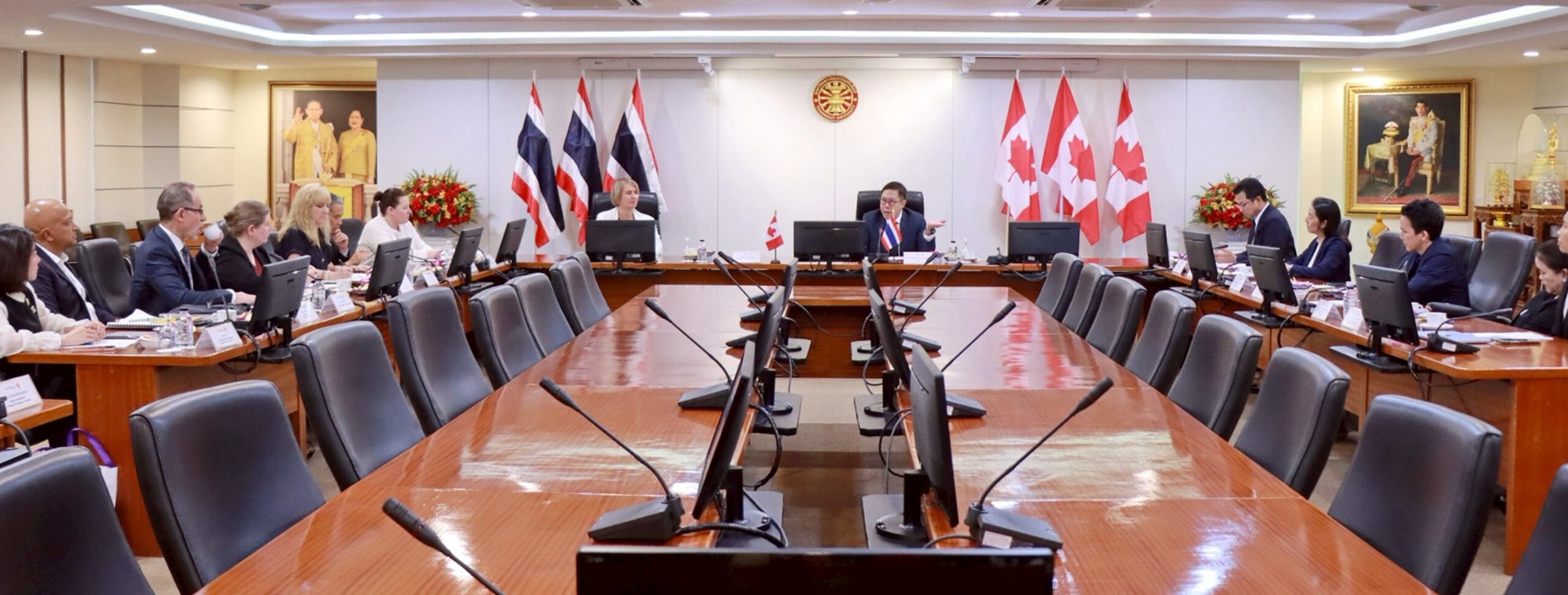
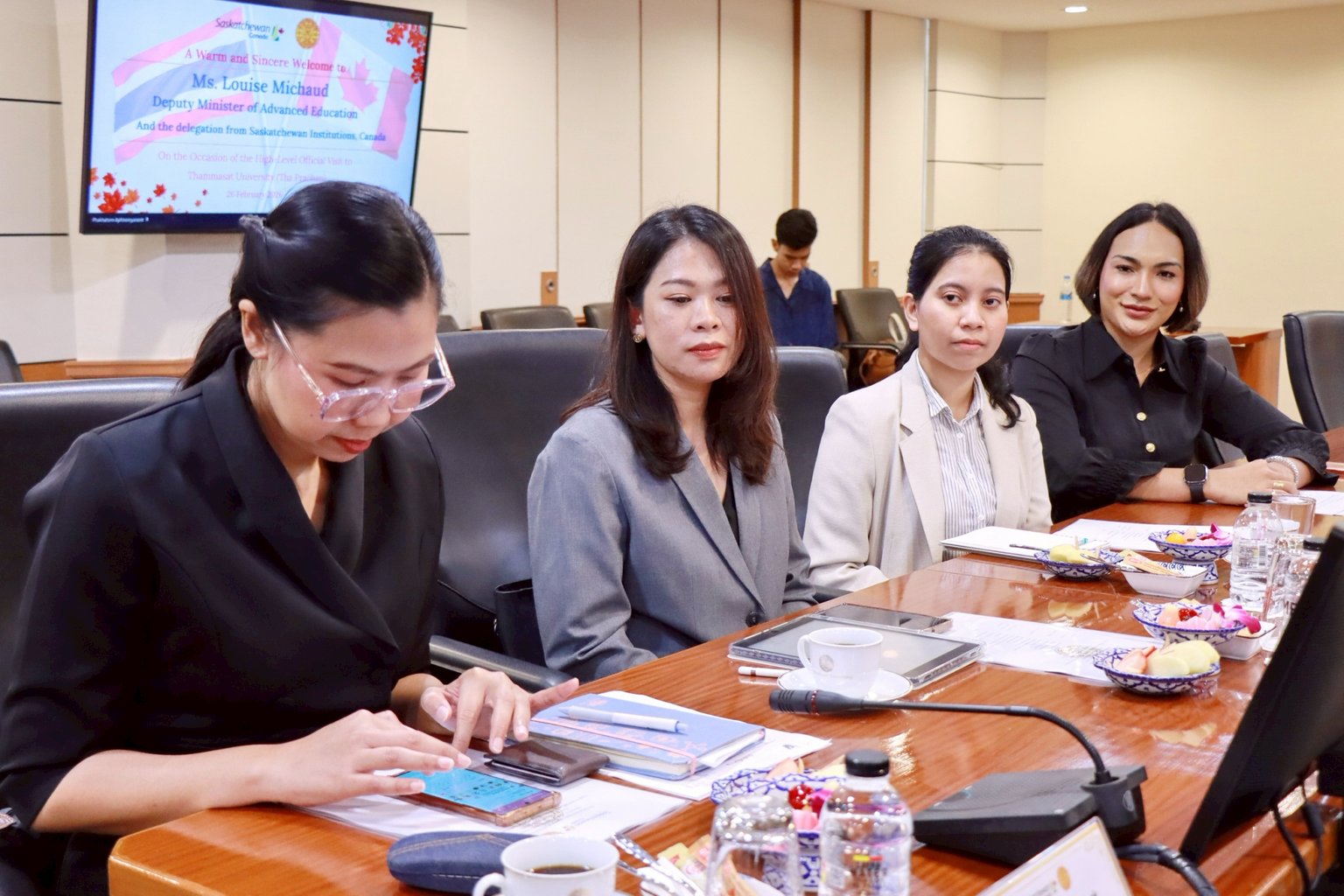
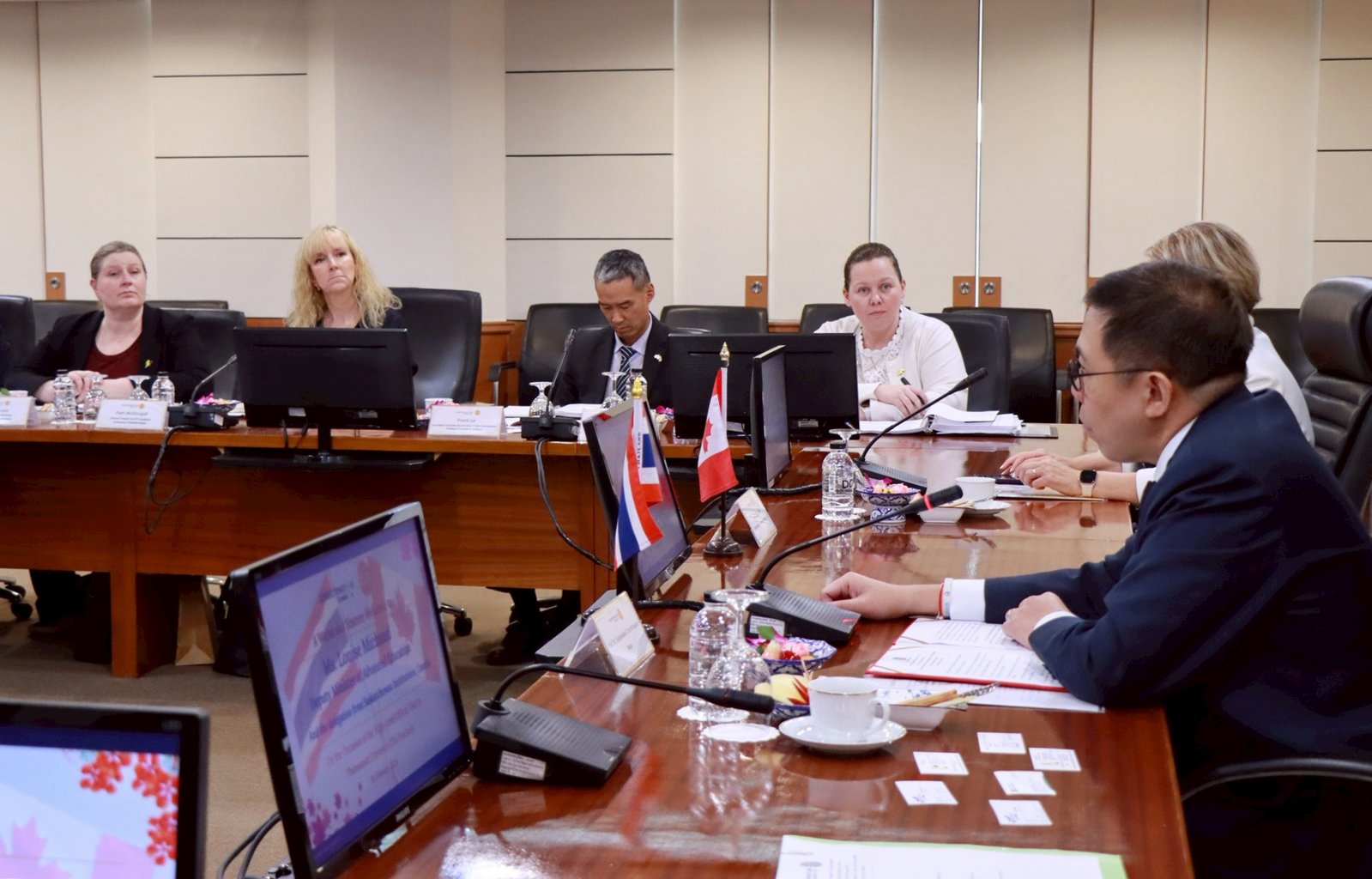
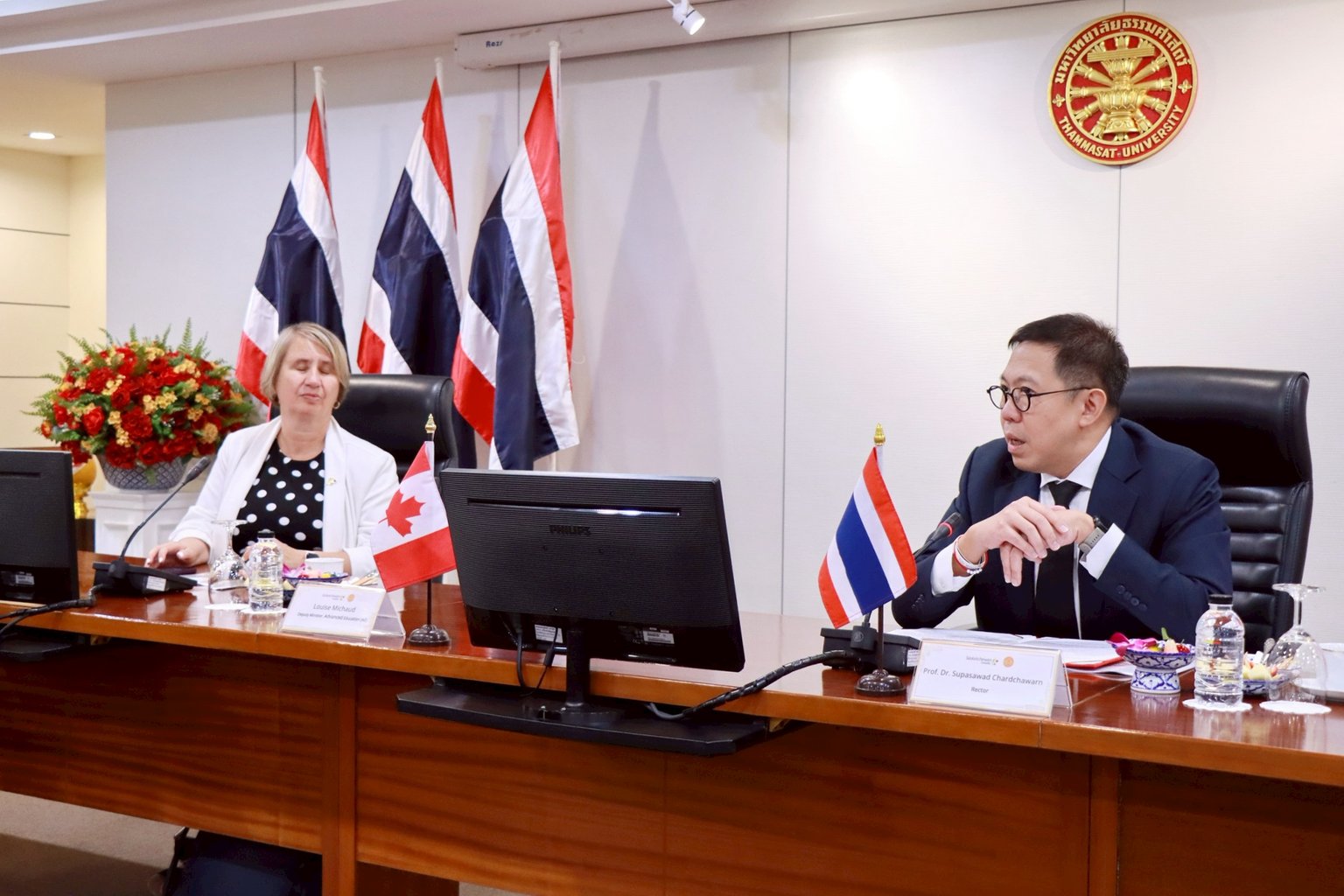
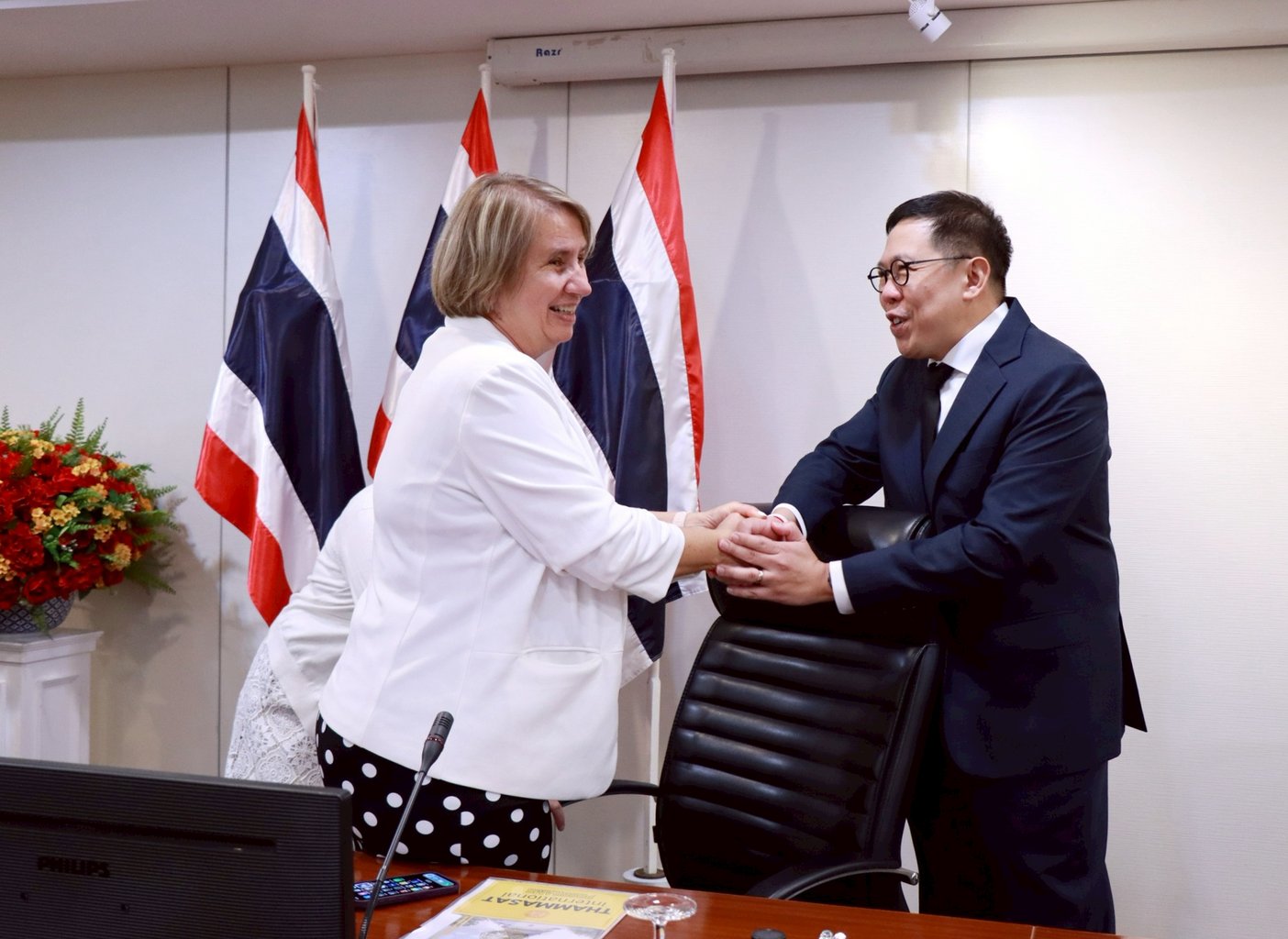
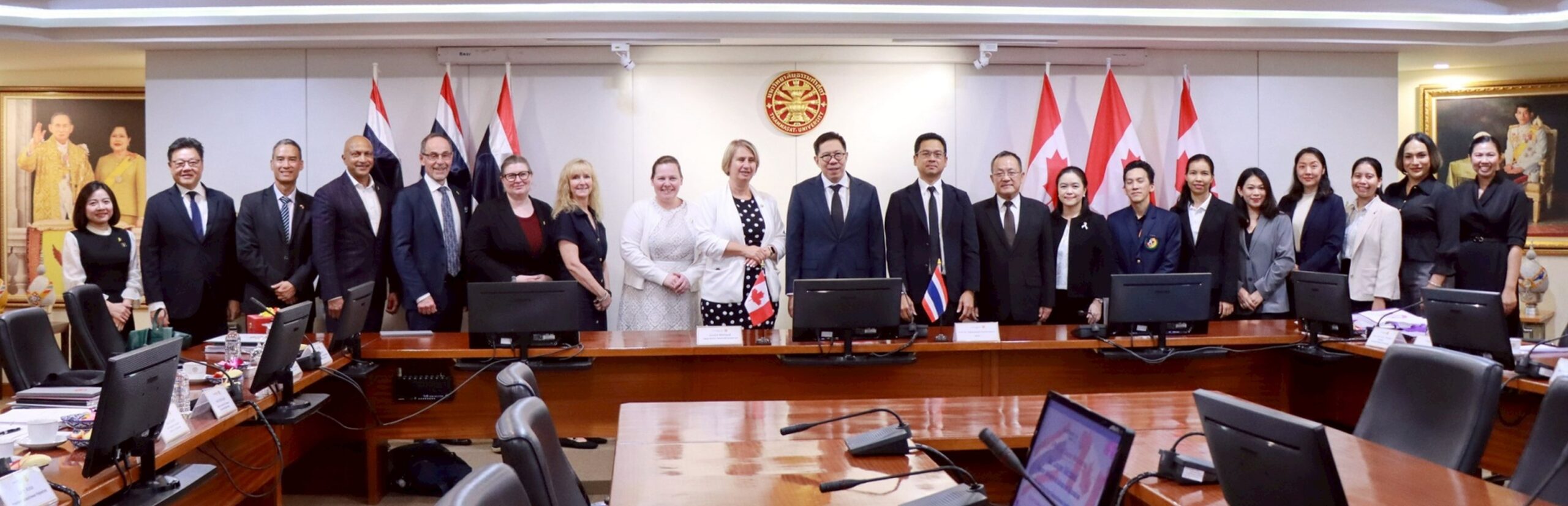
On 26 February 2026, Professor Dr. Supasawad Chardchawarn, Rector of Thammasat University, welcomed Louise Michaud, Deputy Minister of Advanced Education (AE) of the government of Saskatchewan, Canada, during her official visit to Thammasat and Thailand.
The Deputy Minister was accompanied by the Executive Director of International Education of AE and a delegation from the University of Saskatchewan (USask), Saskatchewan Polytechnic (Sask Polytech), and the Embassy of Canada to Thailand. The welcoming meeting was also attended by Thammasat University’s Vice Rector for Research and Innovation, the Assistant to the Rector for International Affairs, and executives from the Chulabhorn International College of Medicine (CICM), Thammasat School of Engineering, and Thammasat Design School.
Key discussion points
The meeting focused on advancing academic collaboration, strengthening research partnerships, and developing practical skills to align with the needs of the industrial workforce.
Thammasat University Rector and executives underscored the importance of expanding academic collaboration through the Bachelor–Master Dual Degree model and advancing joint research initiatives in Carbon Neutrality and Net Zero, supported by a Matching Fund mechanism. Thammasat also underlined its commitment to enhancing “experiential learning” through internships, aligning with the Work-Integrated Learning (WIL) flagship program of Saskatchewan Polytechnic.
At the faculty level, representatives from the College of Medicine (CICM) expressed interest in pursuing short-term programs with scholarship opportunities. Meanwhile, the Faculty of Engineering emphasized expanding collaboration in Dual Degree development, industry-based internships, and Carbon Net Zero research, as well as supporting integrated international study-and-work opportunities.
The University of Saskatchewan proposed collaboration in blended learning, particularly in the fields of environment and sustainability. They also emphasized the One Health approach, which recognizes the interconnection between human health, animal health, and the environment. In addition, the university expressed interest in expanding cooperation in Public Policy and Quantum Technology, as well as developing a co-supervision model at the graduate level.
Meanwhile, Saskatchewan Polytechnic highlighted its strength in applied research aimed at accelerating technology adoption in the industrial sector. The institution also emphasized enhancing applied learning and Work-Integrated Learning (WIL) by integrating internship programs into the curriculum.
Future Collaboration Plans
To deepen academic ties, Thammasat and Saskatchewan institutions identified several mutual areas of interest, including:
- Developing Bachelor–Master Dual Degree Programs
- Advancing joint research in Carbon Neutrality and Net Zero initiatives
- Expanding collaboration in Work-Integrated Learning and internship programs
- Promoting applied research to serve industry demands