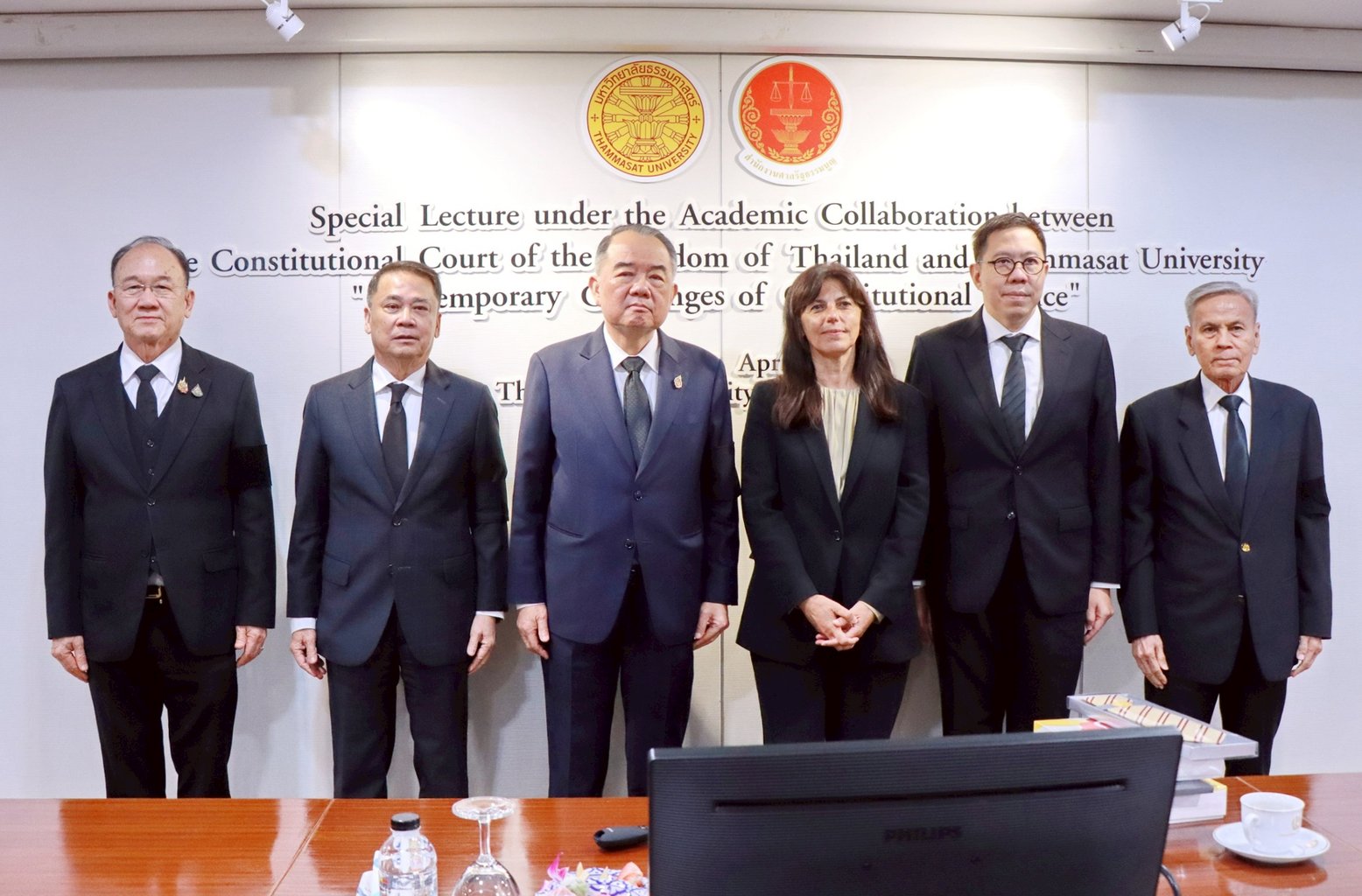
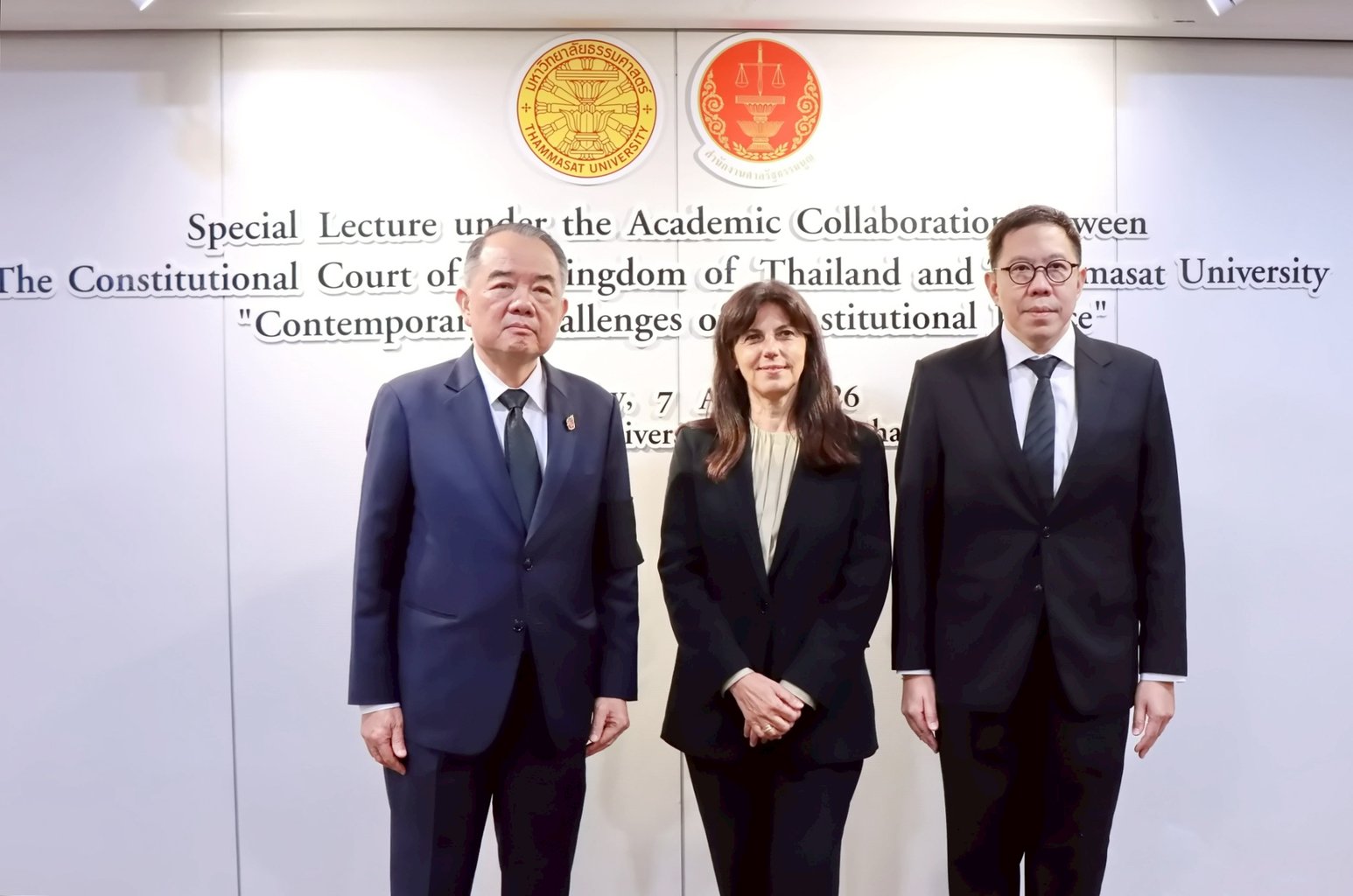
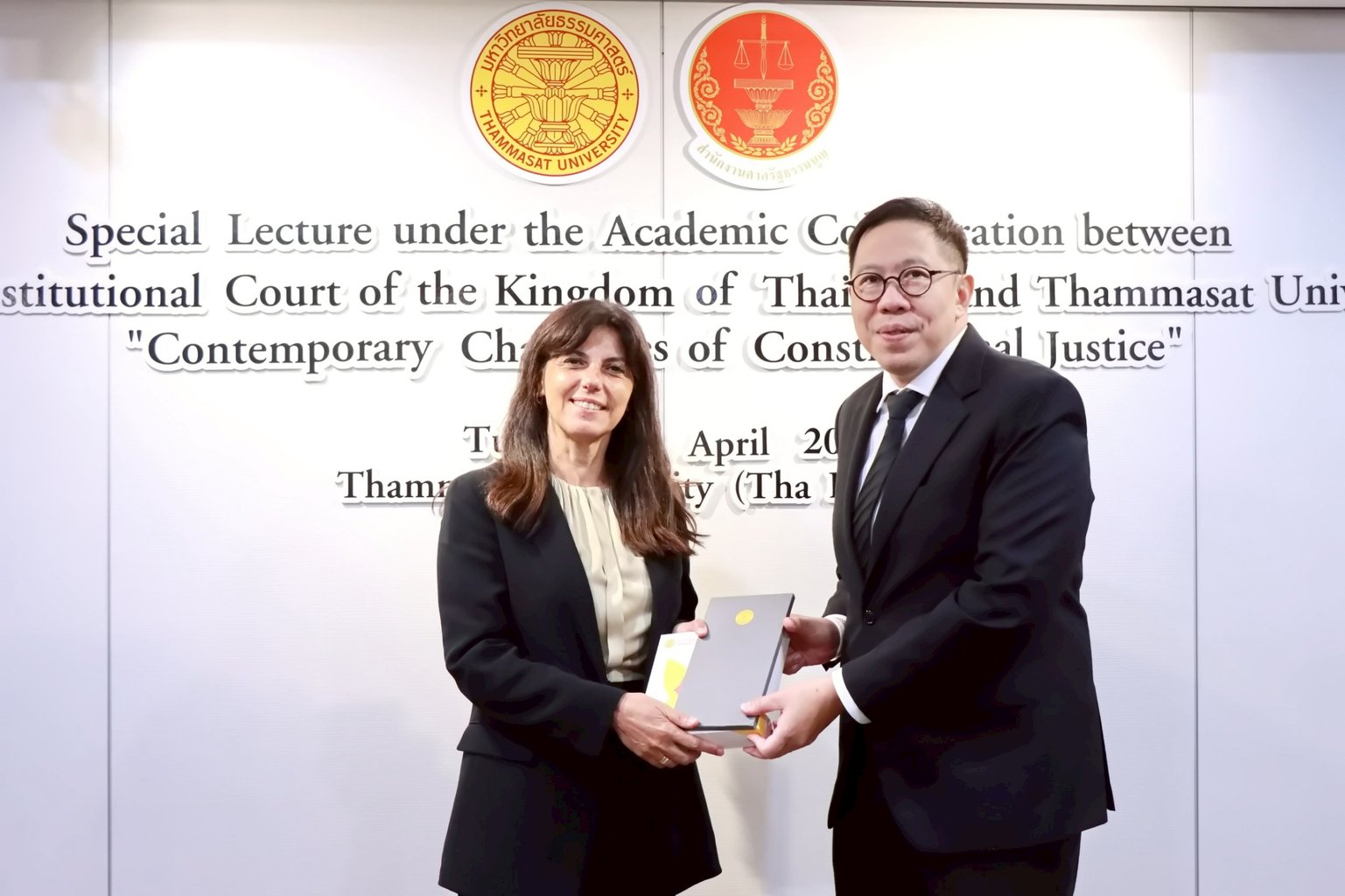
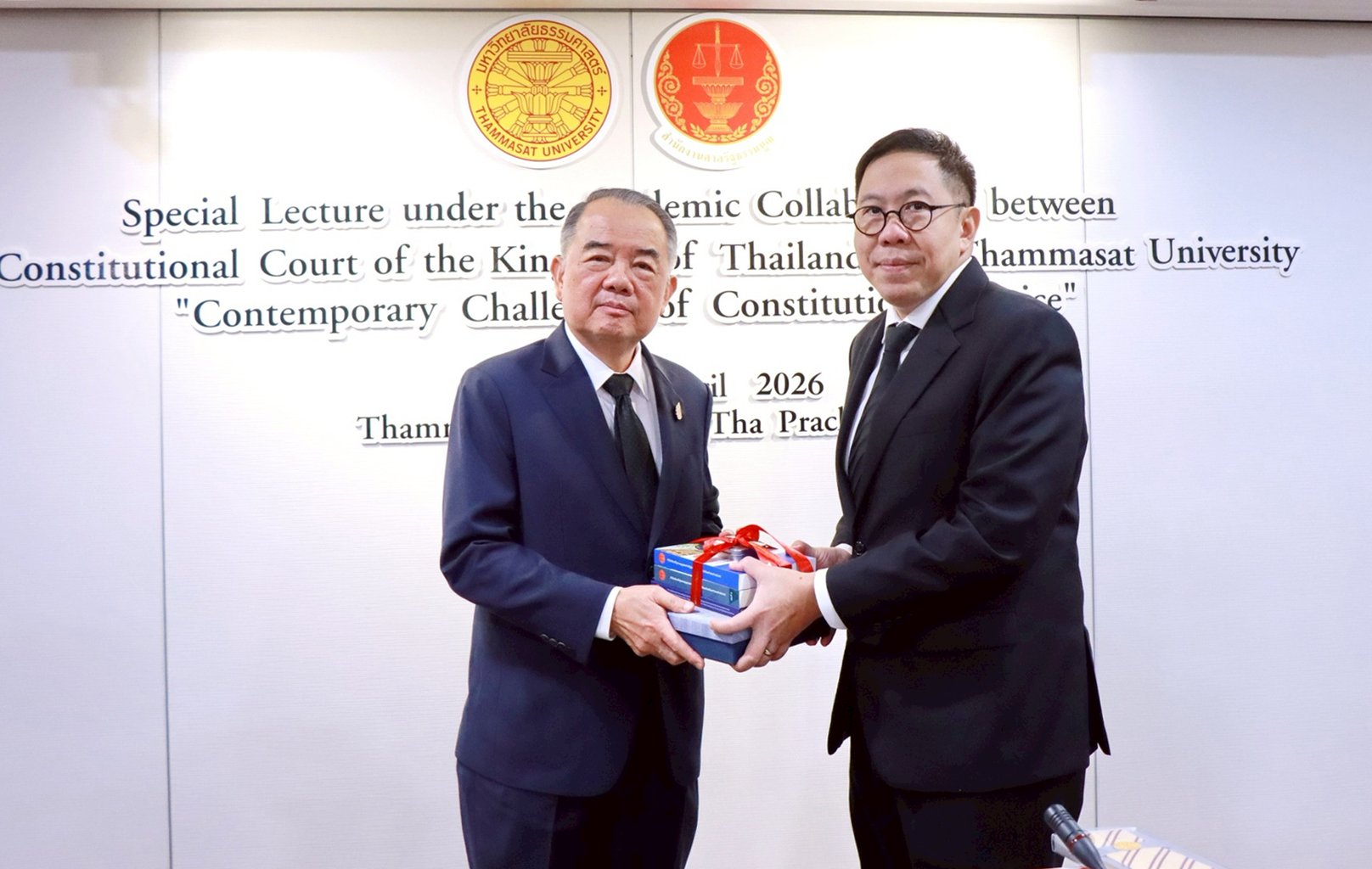
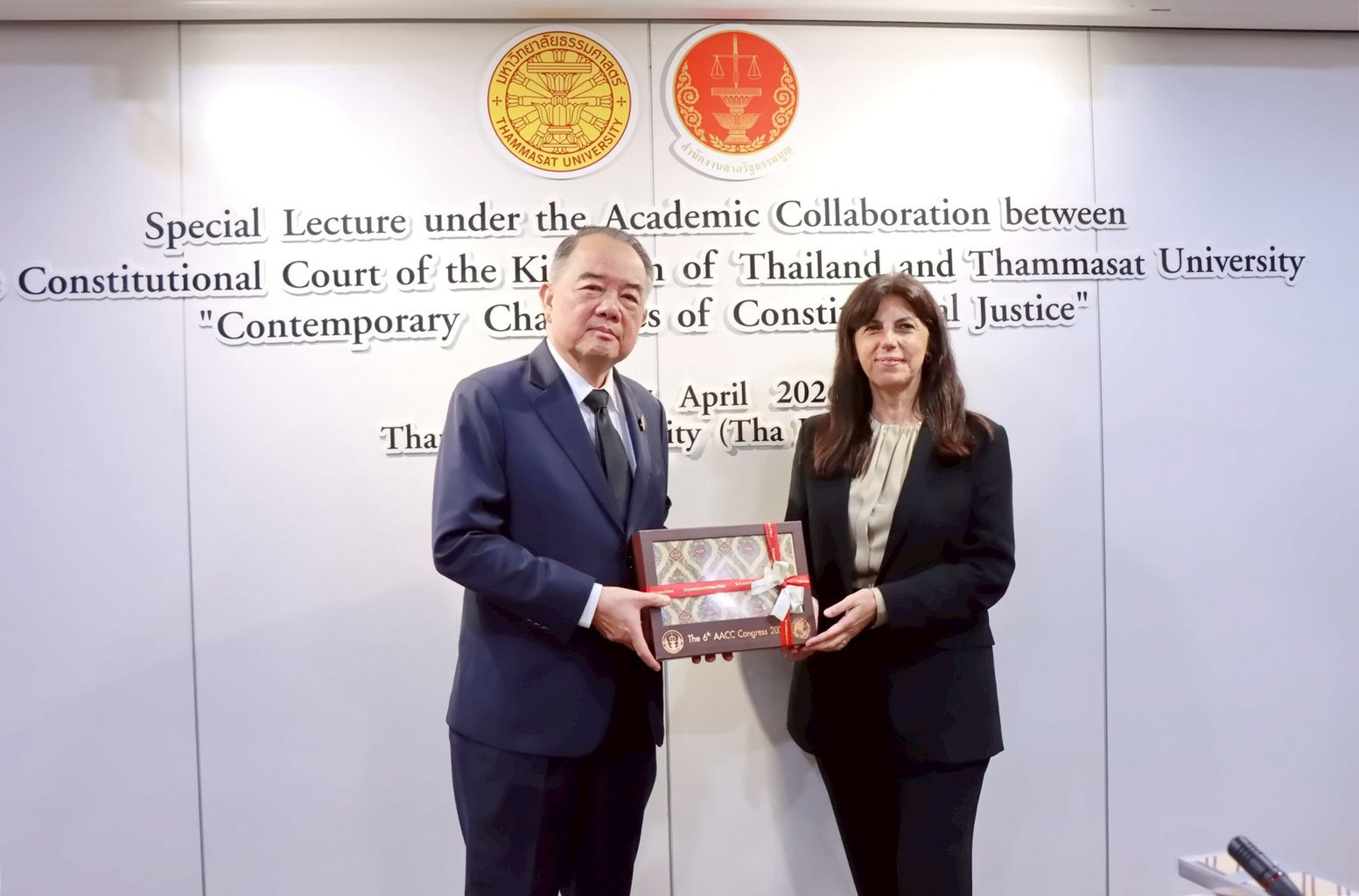
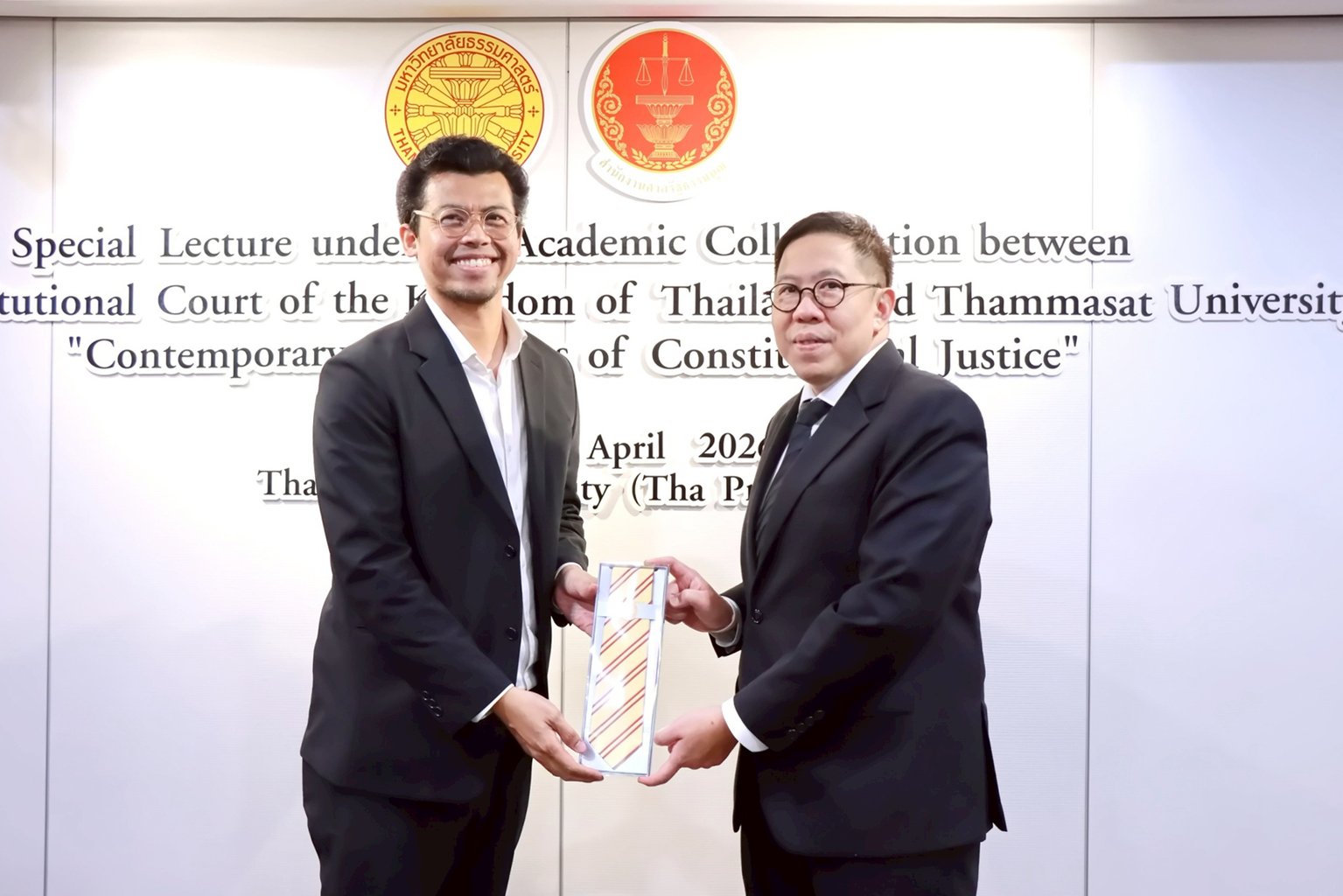
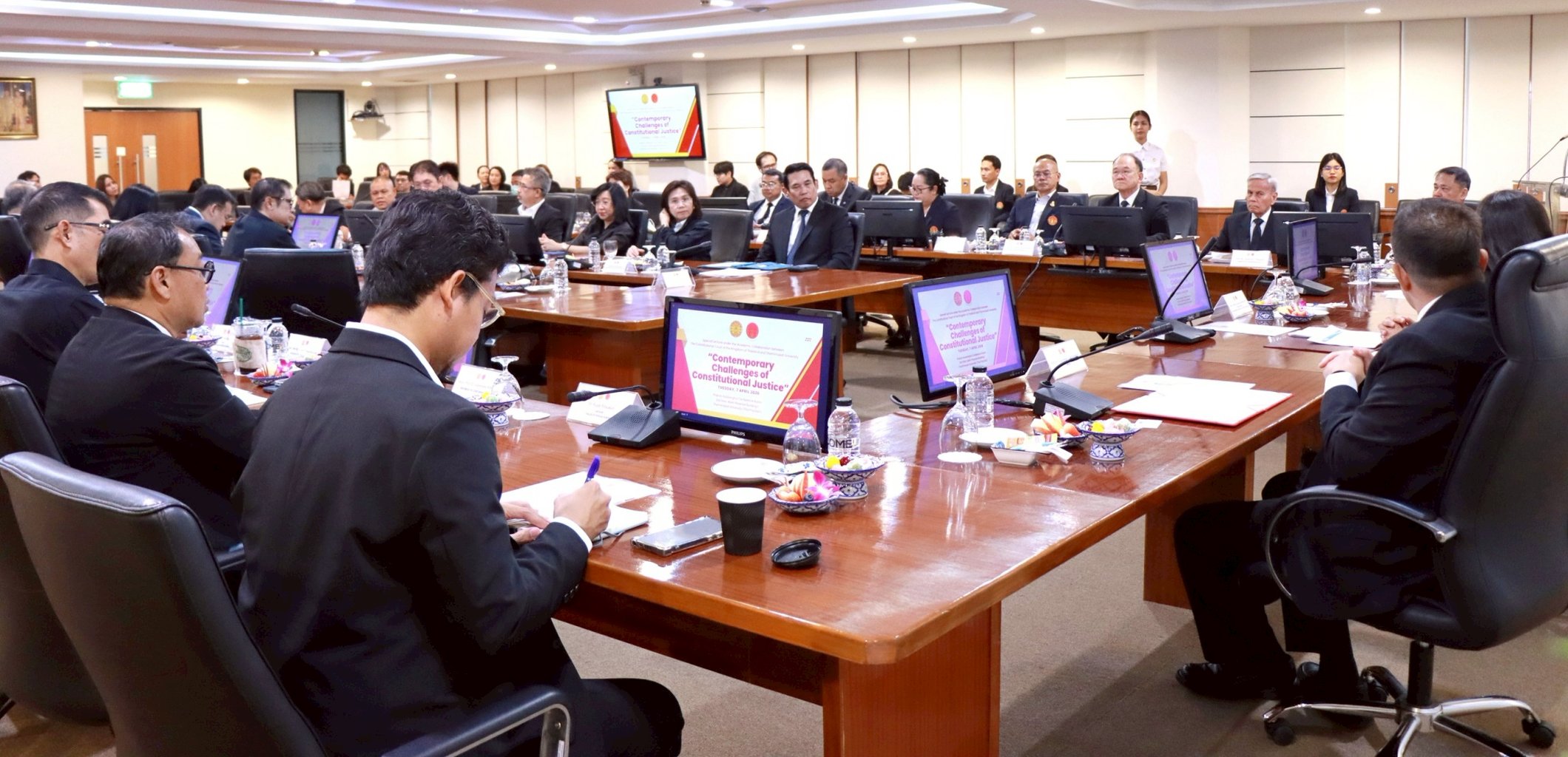
On 7 April 2026, Thammasat University, in collaboration with The Constitutional Court of the Kingdom of Thailand, co-hosted a special lecture on “Contemporary Challenges of Constitutional Justice”. The lecture was delivered by Ms. Simona Granata-Menghini, Director/Secretary of the Venice Commission, at the Prakob Hutasingha Meeting Room, Tha Prachan campus.
The event was attended by Justices of the Constitutional Court, led by Hon. Prof. Dr. Nakharin Mektrairat, President of the Constitutional Court, along with executives from the Office of the Constitutional Court and participants of the Training Course on “The Rule of Law for Democracy” (Class No. 14).
The Thammasat delegation was led by Prof. Dr. Supasawad Chardchawarn, Rector, together with Vice Rectors, Assistants to the Rector, and representatives from the Faculties of Law and Political Science, as well as distinguished guests.
In his opening remarks, the Rector reaffirmed Thammasat University’s longstanding commitment to educating generations of legal professionals dedicated to public service and justice. He highlighted he University’s historic role – since its founding in 1934 as Thailand’s first institution devoted to the study of law and politics – in producing graduates who have served with distinction across the judiciary, including the Constitutional Court.
The highlight of the program was the keynote lecture by Ms. Simona Granata-Menghini, who delivered an insightful analysis of “Contemporary Challenges of Constitutional Justice”. She underscored the key role of constitutional courts in safeguarding human rights, democracy, and the rule of law, and outlined several key challenges facing constitutional justice today:
- Peace is safeguarded through constitutional justice by ensuring the resolution of disputes within a structured legal framework, thereby preventing political escalation and preserving constitutional order.
- The authority of constitutional courts as independent and objective arbiters constitutes a fundamental pillar of constitutional governance, yet it is increasingly challenged by political interference and democratic backsliding.
- Trust and respect are contingent upon the effective execution of constitutional court judgments, constructive criticism, institutional support, and transparent communication with the public.
- Responsiveness requires constitutional courts to balance their reactive adjudicative function with a measured proactive approach in addressing evolving societal and legal developments.
- Digital technology and artificial intelligence raise complex constitutional concerns relating to legality, legal certainty, data protection, transparency, and algorithmic bias, while necessitating the preservation of human judgment in decision-making processes.
The lecture was followed by a discussion moderated by Fuadi Pitsuwan from the Faculty of Political Science at Thammasat University. The session provided a valuable platform for exchanging perspectives and deepening collective understanding of constitutional justice in a rapidly changing global context.
The event marked an important step in strengthening academic and judicial collaboration between Thammasat and the Office of the Constitutional Court. It also reinforced the role of both institutions as key partners in advancing constitutional law and promoting the rule of law in Thailand and beyond.